头条英文播报|IMF fears worst recession since 1930s
来源:中国日报
IMF fears worst recession since 1930s
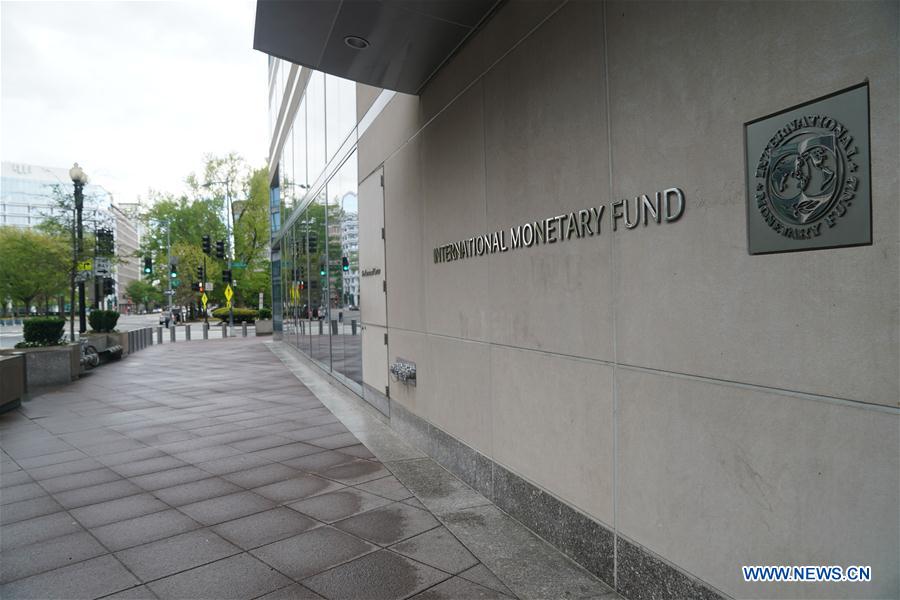
The International Monetary Fund (IMF) Headquarters is seen in Washington DC, the United States, April 13, 2020. [Photo/Xinhua]
Agency predicts rebound for China of up to 9.2% growth in 2021 after 1.2% rise this year
With the International Monetary Fund predicting on Tuesday the worst global downturn since the 1930s, China has deployed an additional policy response to address the slowdown caused by the novel coronavirus pandemic and facilitate economic recovery through incentivizing bank lending and stabilizing corporate hiring.
A few hours after the IMF revised its projection on China's economic growth outlook-to 1.2 percent GDP growth this year, before a strong rebound up to 9.2 percent in 2021-the nation's central bank cut a key lending rate to a record low and injected large amounts of liquidity into the financial sector on Wednesday.
The IMF said the global economy is projected to contract by 3 percent this year, and the COVID-19 pandemic would send global growth into its deepest recession since the Great Depression in the 1930s.
"The Great Lockdown", as the IMF called the economic downturn, could weaken global demand and depress exports, adding risks to otherwise recovering Chinese business activities. It will require stronger monetary and fiscal action to minimize persistent problems that could emerge from subdued investment and job losses in this severe downturn, economists said.
Blunting the impact of the severe shock will require a surge of government debt, which is the key funding source of fiscal stimulus, and an optimized debt management system should be put in place to prevent potential financial risks during the recovery phase, said Li Yang, director of the Chinese Academy of Social Sciences' National Institution for Finance and Development.
"Interest rates should be cut quickly, with an increase of money and credit supply. As central banks worldwide are taking aggressive monetary easing, there is no need for China to hold still," Li said.
China's central bank, the People's Bank of China, cut the one-year medium-term lending facility rate-a base to determine the new lending benchmark called the loan prime rate, by 0.2 percentage points to 2.95 percent. The drop was the largest within four years, and the new MLF rate hit the lowest level since its introduction in 2014.
Financial analysts expect a lower loan prime rate, down by the same degree, to be reported on Monday, to further ease lending costs of corporate borrowers, especially to support smaller businesses under pressure.
The PBOC injected 100 billion yuan ($14.16 billion) of liquidity through the MLF and released about 200 billion yuan in long-term funds into the interbank market through the targeted cut of some small and medium-sized depositary institutions' reserve requirement ratios on Wednesday.
New financial relief measures were put in place before China reports its major economic indicators, set for Friday. Economists predicted a sharp slowdown in the first quarter caused by the coronavirus-induced lockdown.
Zhang Ming, an economist at the Institute of World Economics and Politics of the Chinese Academy of Social Sciences, said expansionary fiscal policy should take the leading role in the recovery process and support funding for corporations and households. Measures include tax relief, direct subsidies, coupons that can be traded for consumer goods and cash payments to individuals, he said.
The fiscal actions should first keep small and medium-sized companies from bankruptcy and subsidize the unemployed, then strengthen infrastructure investment, Zhang said.
Robin Xing, chief China economist at Morgan Stanley, said Beijing could soon approve special central government bonds and raise local governments' special bond front-loading quota to support growth. He estimated the total amount of government bond financing could be 4.3 trillion yuan higher than last year.
Foreign Ministry spokesman Zhao Lijian said at a news conference on Wednesday that major economies should take necessary monetary, fiscal and structural policies to stabilize market expectations and improve economic resilience. He called for elimination of trade restrictions such as tariff hikes.
On Tuesday, the IMF updated its Global Financial Stability Report, which said financial conditions in China have been broadly stable, in contrast with other countries. This may have reflected early, proactive efforts that helped stabilize market conditions and sentiment, the report said.
"The large, timely and targeted fiscal, monetary and financial policies already taken by many policymakers-including credit guarantees, liquidity facilities, loan forbearance, expanded unemployment insurance, enhanced benefits and tax relief-have been lifelines to households and businesses, and this support should continue," said Gita Gopinath, the IMF's chief economist.
Find more audio news on the China Daily app.
【背景阅读】
IMF最新报告预计今年全球经济将出现萎缩,并发出呼吁——
合作抗击疫情稳定全球经济
核心阅读
国际货币基金组织(IMF)最新发布的《世界经济展望报告》称,新冠肺炎疫情在全球扩散蔓延,将对世界经济带来严重冲击,其影响程度将超过2008年国际金融危机。面对这场公共卫生和全球经济的双重危机,IMF强烈敦促各国强化多边合作,共同推动疫情后全球经济的复苏。
人民日报华盛顿4月15日电4月14日,国际货币基金组织(IMF)发布最新一期《世界经济展望报告》称,受新冠肺炎疫情冲击,2020年全球经济预计将萎缩3%,为上世纪30年代大萧条以来最严重的经济衰退。目前,全球疫情何时得到遏制仍存不确定性。IMF认为,若疫情能在今年下半年消退,相关抗疫措施逐渐放宽并配合一系列政策支持,2021年全球经济依然有望反弹至增长5.8%。IMF指出,强有力的多边合作,对于遏制疫情蔓延和全球经济复苏至关重要。
“多重因素导致全球经济大幅放缓”
IMF表示,自1月份IMF发布《世界经济展望报告》更新内容以来,全球经济形势急剧变化,新冠肺炎疫情引发的全球公共卫生危机对经济活动造成巨大冲击。为遏制疫情蔓延,多数经济体采取了“隔离、区域封锁、社交疏离”等措施,这些举措带来的经济冲击通过贸易和产业链扩散到贸易伙伴乃至全球。假如疫情在今年第二季度达到峰值并在下半年消退,今年全球经济将萎缩3%。这与今年1月份3.3%的增速预测相比,大幅下调了6.3个百分点。
“这是在很短时间内IMF做出的大幅修正。随着各国为控制疫情而采取必要的措施,许多国家面临包括公共卫生危机、金融危机在内的多重危机,它们以复杂方式相互作用。”IMF首席经济学家吉塔·戈皮塔表示,这是自上世纪30年代大萧条以来发达经济体、新兴市场和发展中经济体首次同时陷入经济衰退,预计今年170多个国家和地区的人均收入将出现下降。据估计,此次疫情在2020年和2021年对全球GDP造成的累计损失可能约为9万亿美元。
具体而言,IMF预测2020年发达国家经济将萎缩6.1%,如果疫情在下半年消退,2021年有望增长4.5%。发展中和新兴市场国家经济体今年将萎缩1.0%,明年有望增长6.6%。吉塔·戈皮塔表示:“目前疫情及经济走势仍不明朗。全球经济能否在2021年出现反弹复苏,很大程度上要依赖于疫情防控的结果。”
“多重因素导致全球经济大幅放缓。”IMF研究部世界经济研究处处长马尔哈·纳布尔对记者表示,一是疫情造成经济活动中断;二是外部需求疲软和供应链中断造成的全球溢出效应;三是争相购买避险资产和借贷成本上升带来的相关金融压力。此外,对于资源出口型国家而言,需求疲软造成的大宗商品价格急剧下跌,给相关国家的公共财政和外贸带来压力。
IMF认为,由于部分行业受到冲击严重,政策制定者实施了大量有针对性的财政、货币和金融市场措施,以支持受影响的家庭和企业。在整个疫情防控阶段,应继续提供这种支持,以尽量减少经济严重衰退期间投资乏力和失业可能带来的持久创伤。马尔哈·纳布尔强调,持续有效和沟通良好的政策行动对于提振商业信心和加强经贸活动至关重要。
“中国经济社会秩序加快恢复令人鼓舞”
IMF多次表示:“中国经济社会秩序加快恢复令人鼓舞。正确的政策举措能有效对冲和减缓疫情带来的冲击,发挥重要作用。”IMF总裁格奥尔基耶娃多次表示:“中国经济具有较强韧性,通过政府提供的政策支持,中国经济正在重返正轨。”在最新报告中,IMF预测中国经济今年仍将保持增长。
IMF当天还发布了《全球金融稳定报告》,IMF金融顾问兼货币和资本市场部主任托拜厄斯·阿德里安在回答记者提问时表示,得益于及时采取有效的“组合拳”应对疫情冲击,包括严格的公共卫生健康措施,以及一系列有针对性的货币和财政政策等,“中国经济秩序正快速恢复正常”。
马尔哈·纳布尔认为,中国在疫情防控的同时统筹做好经济社会发展工作,政策反应迅速,帮助保护受影响的民众、企业和最困难群体,为世界经济稳定作出了积极贡献。同时,由于贸易环境的变化,中国经济要注意面临来自外部需求减弱的挑战。
“多边合作对全球经济恢复健康至关重要”
“今年全球经济下滑的幅度存在相当大不确定性,疫情结束后全球复苏的力度也存在很大不确定性。”马尔哈·纳布尔认为,在经历了一段时间的衰退和收入下降后,对危机蔓延的担忧可能会对民众的消费支出造成压力,由此减缓复苏进度。
“多边合作对全球经济恢复健康至关重要。”吉塔·戈皮塔认为,各国急需强化合作,助力经济恢复健康,避免全球化进程和经济复苏受到损害。
IMF呼吁各国强化多边合作,希望各国政府加大医疗健康领域的投入建设,保证医疗物资的贸易流通顺畅,共同研发疫苗和药物,让所有国家都能共享成果。
美国有线电视新闻网的评论说,IMF警告称,新冠肺炎疫情正在使全球经济陷入上世纪30年代大萧条以来最严重的衰退,各国政府和卫生官员只有共同努力、团结合作,才能防止出现更糟糕的结果。如果政策制定者不能协调全球应对疫情,经济衰退可能会延续到2021年。
《华盛顿邮报》刊发英国前首相戈登·布朗和美国前财长劳伦斯·萨默斯的联合署名文章称,从历史上看正是国际合作的失败让大萧条肆虐全球,文章呼吁IMF、世界银行等国际机构和各国央行通力合作,采取积极措施维护全球金融体系的稳定和健康。文章表示:“正如通过早期大胆的措施可以最有效地控制疫情一样,我们必须迅速回应,共同行动。”
中国外交部发言人赵立坚表示,越是关键时刻,越需要国际社会秉持构建人类命运共同体理念,发扬同舟共济、合作共赢的伙伴精神,团结应对、共克时艰,为世界经济发展注入信心、增添力量。
马尔哈·纳布尔强调,强化多边合作对应对全球公共卫生危机十分重要。他建议国际社会共同努力,寻找疫苗和治疗方法,同时确保基本医疗用品和设备的跨境运输没有障碍,并向低收入国家提供多边援助。“合作解决贸易争端,降低扭曲的贸易壁垒,将极大助力全球经济复苏。”(来源:人民日报)
 | Pусский